
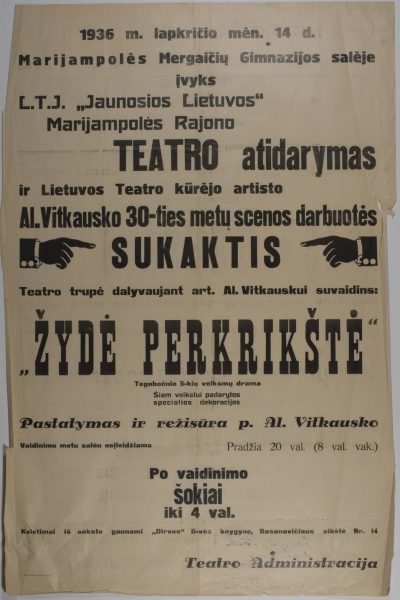
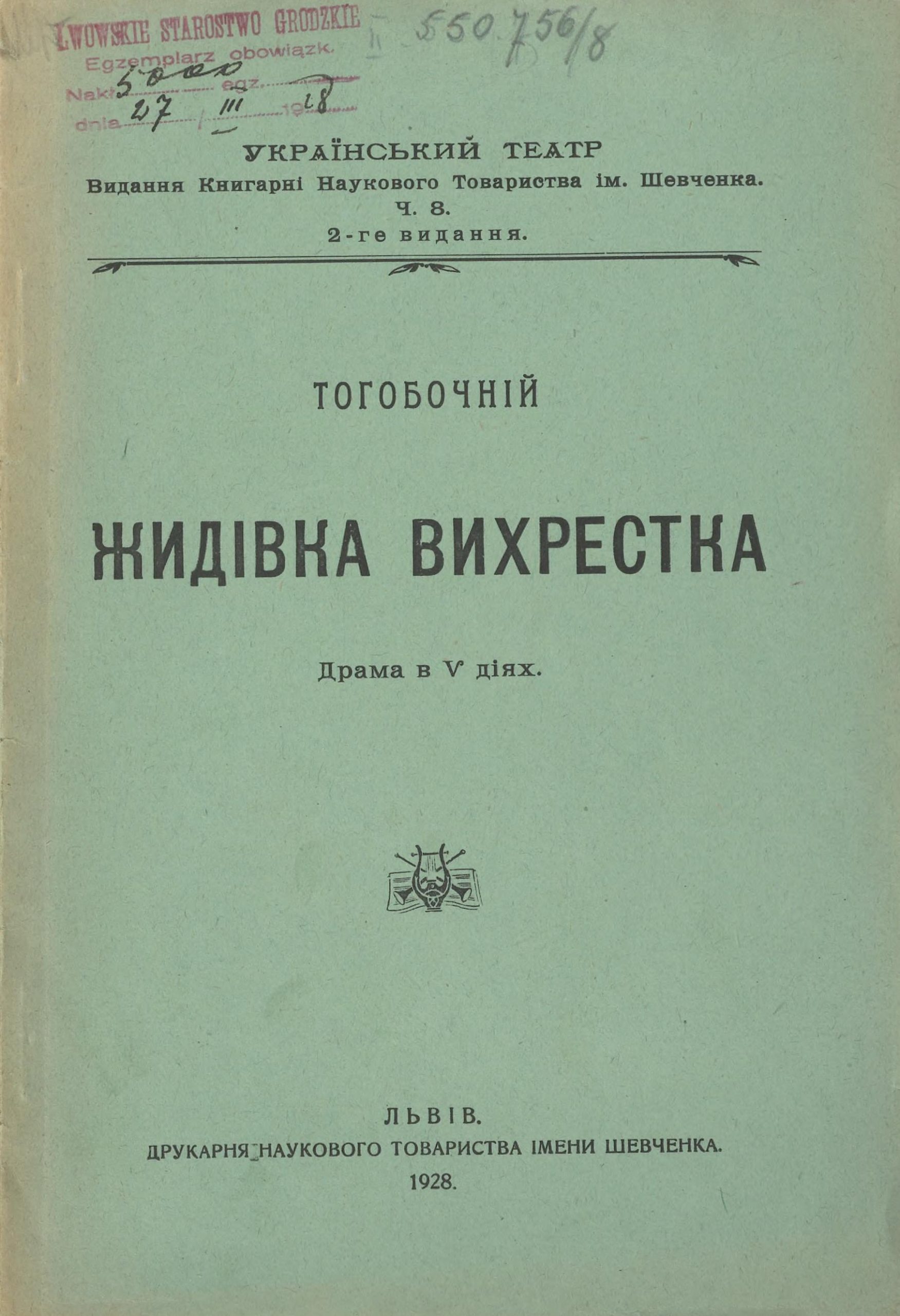
Several days before November 14, 1936 a number of posters were put up announcing two upcoming events – the opening of the theatre in Marijampolė by national youth union ‘‘Young Lithuania‘‘, which promoted cultural and sport youth initiatives, and also the play to be held in Marijampolė girls‘ gymnasium. It was a five-act drama ’’A Jewish woman re-christening’’ by Ukrainian author Ivan Togobochno (real surname Shogolev). The play was published in Lviv, Ukraine in 1928. It was a simple story about difficult choices between love and wealth, feelings between the people of different religions and a gap among traditional communities.
It is interesting that a year after this performance, a printing house in Marijampolė ‘‘Dirva“ printed 32 pages of the story ‘‘The Jewish woman re-christened: a three act grotesque‘‘, signed by J. Labužėlis (the author J. Masiulionis). It was short but mocking play, full of negative attitude and people living in Marijampolė in the fourth decade of the 20th century could buy and read it.
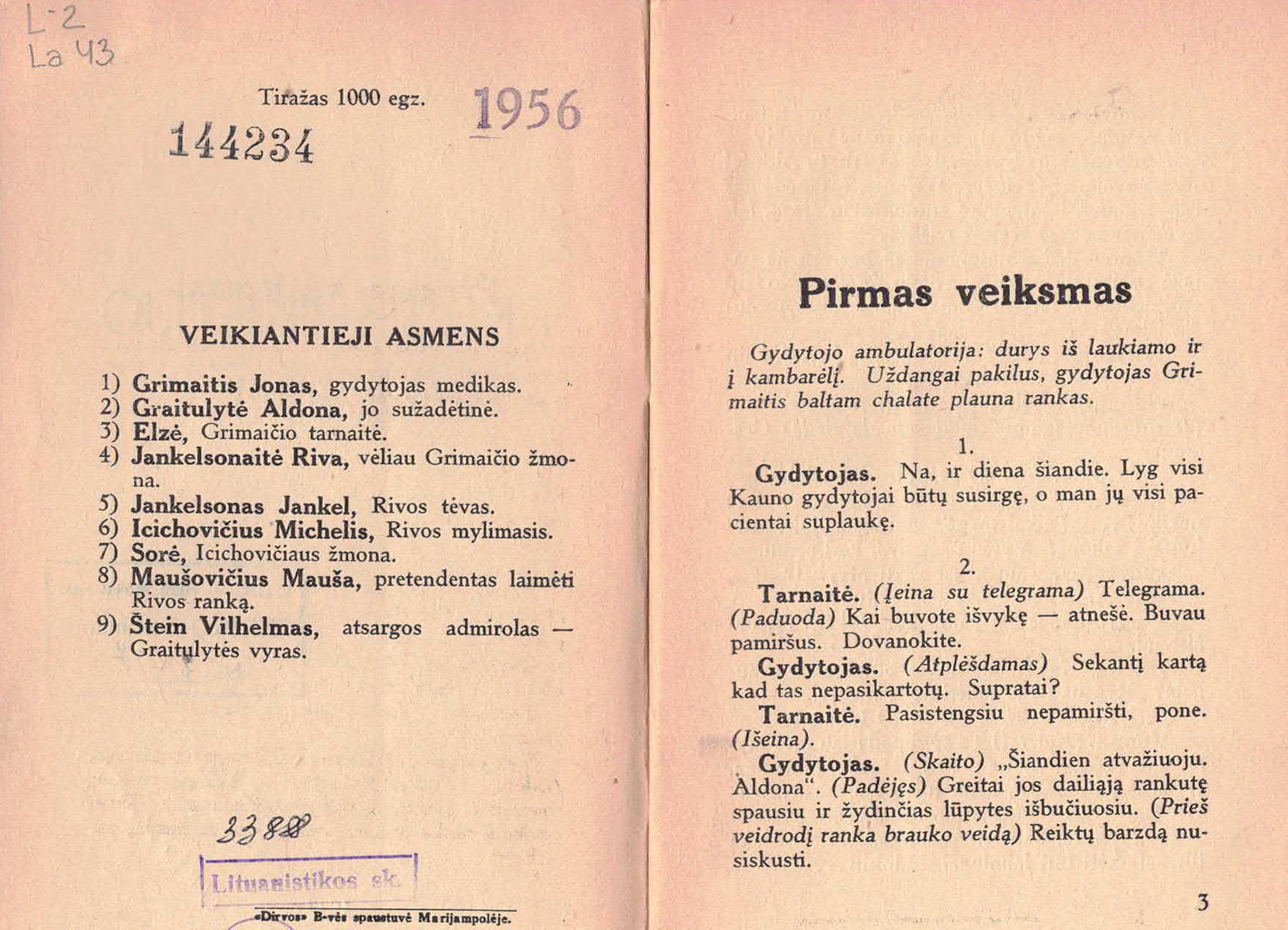
A playwright J. Labužėlis was not highly rated among the literary men thus, the writer was seeking for the topic and the characters that would, according to him, be suitable for grotesque. As a cliche, the characters were the Jewish family who were getting ready for the wedding: a daughter, a father and the groom to be pursuing the wealth of the bride‘s father. To put accent on emotions and characters the author used Yiddish words and phrases that were known to Lithuanians. They were also written in Lithuanian letters. Mišiugana (lunatic), gojus (non-Jewish), givalt (terrible things are happening), a greisin skandal (big scandal/noise), gešeftas (deal), kaput (end to everything).
The Yiddish language belongs to Germanic languages and was formed on the basis of the German language spoken by Ashkenazi Jews. It borrowed elements from Hebrew and Aramaic as well as the words from the language of the populated region. Yiddish was a spoken language rather than a written language for a long time, however, gradually it has become the language of science, literature and culture. The language uses Hebrew letters. The dialect of Yiddish, Litvish, was spoken in Lithuania.