
The Memorial Museum has a great exposition of the interwar Lithuanian president Kazys Grinius (1866-1950). It is established in the house where the president lived in the first decade of the 20th century, 1904-1914.
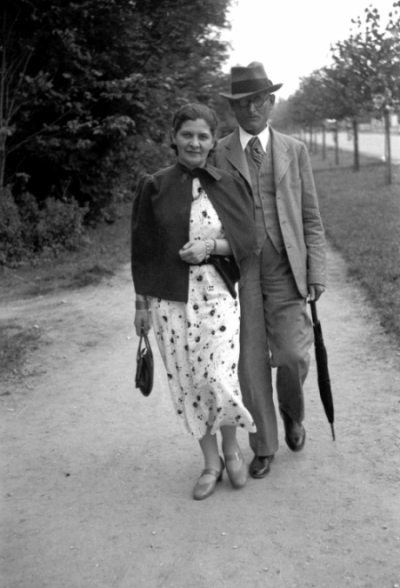
Though he was in office really briefly, the president and his wife Kristina Griniuvienė (Arsaite, 1896-1987) were recognised as the Righteous Among the Nations for saving the Jews during the Holocaust. The title is awarded upon performing serious investigations on the testimonies of the saved or the awareness of the saving fact, by the Commission for the Designation of the Righteous in Yad Vashem Holocaust Memorial Museum in Israel. The president and his wife were recognized as The Righteous Among the Nations at the end of 2015.
The first official evidence of president‘s disapproval to actions of occupational authorities of Nazy Germany was a protest-memorandum of November 14, 1942 to the general commissioner of occupational German army gauleiter Adrian von Renteln, signed together with former ministers of Independent Lithuania prof. Jonas Pranas Alekna (1879-1955) and a priest prof. Mykolas Krupavičius (1885-1970). It was a disapproval of and disagreement with repressions to Lithuanians, Polish and Russians and killing of the Jews. The memorandum had consequences – the ministers were deported to Germany, the president had domiciliary arrest and he was exiled to Salemos Būda village. Kazys Grinius was the one who disapproved publicly and he also helped to save the Jews – Dmitri Gelpern (1914–1998), the leader of Kaunas ghetto‘s Anti-fascist resistance movement, was hidden in the house of Griniai family. He was an acquaintance of Kristina Griniuviene as they both were interested in philately and sometimes exchanged stamps. Griniuvienė found out that Gelpern is in Kaunas and wanted to help him, however, he came back to the ghetto. But after the massacre of 10,000 Jews, known as Great Action, on October 29, 1941 in Kaunas ghetto, Dmitri decided to ask Griniai for help. He was given a separate room in their house and had meals together with the owners. K. Grinius trusted the visitors and did not deny the fact that he was hiding the Jew at home. Gelpern lived there for several months before K. Grinius‘ exile to Salemos Būda, he went out to the town, visited the ghetto, K. Grinius provided him with necessary medicine and information about events in the city.