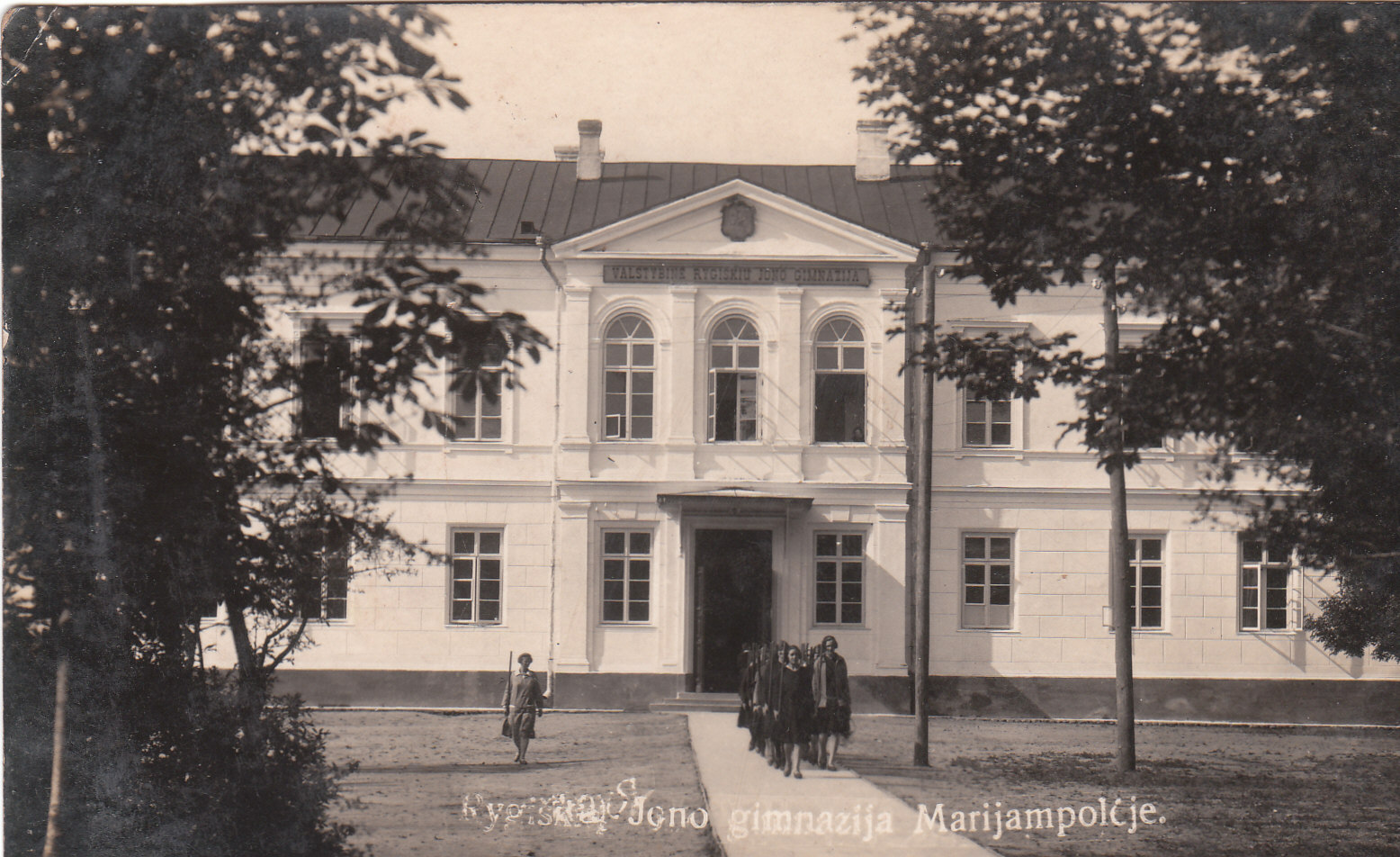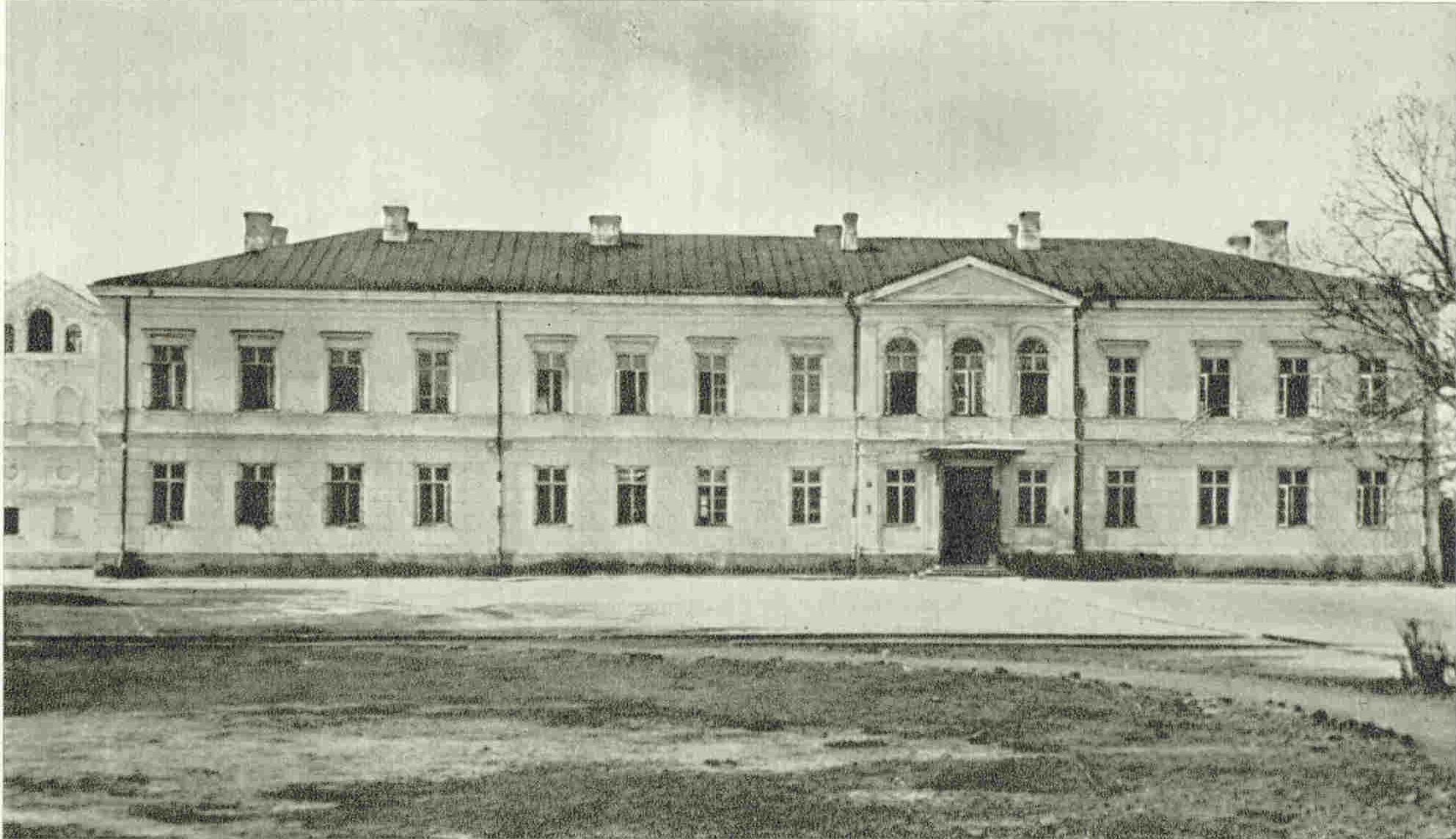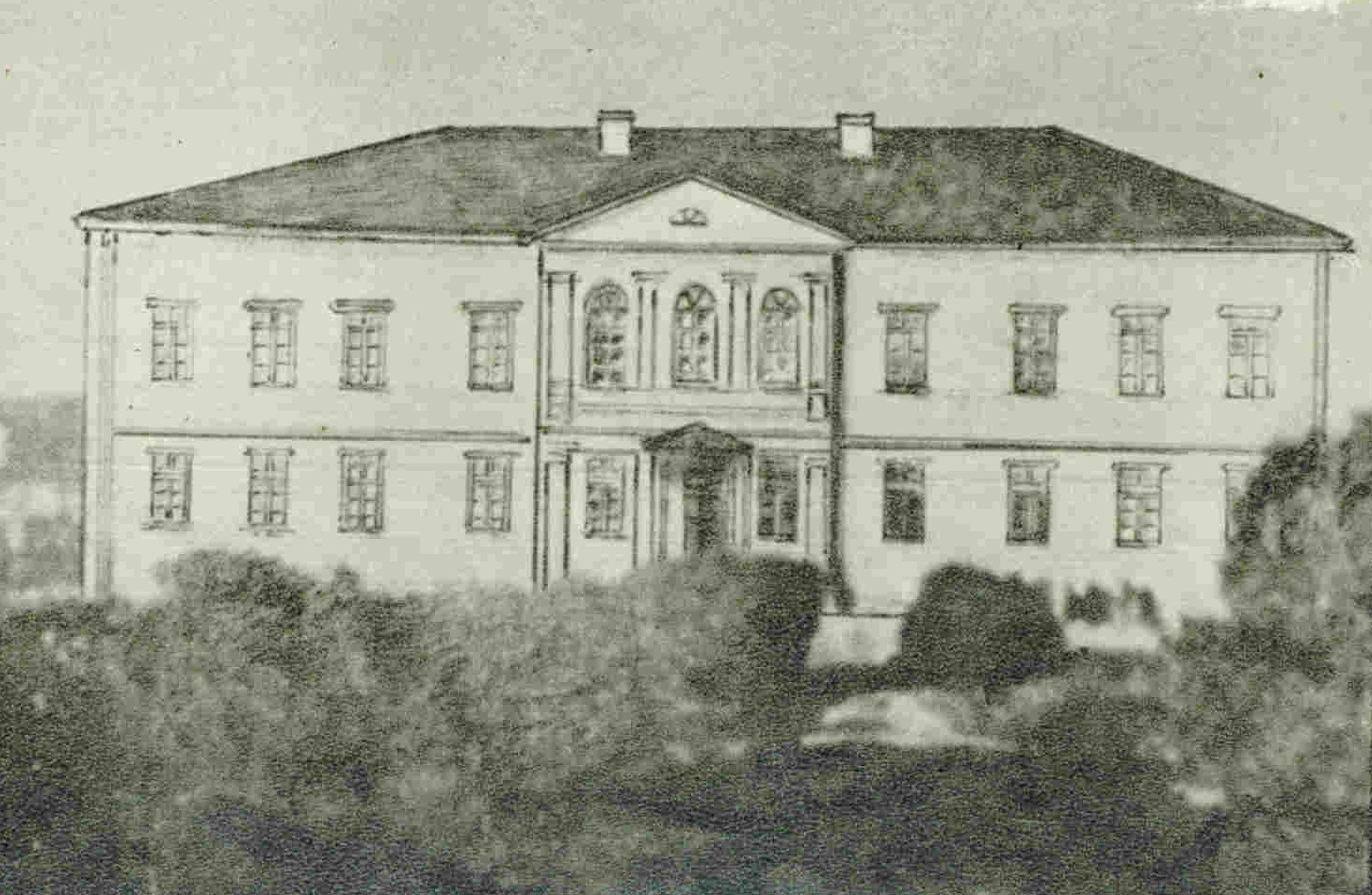
Marijampolė (now Rygiškių Jono) gymnasium is more than 150 years old and is not only one of the oldest gymnasiums in Lithuania but also known for exceptional achievements of its students. A lot of them were prominent personalities in Lithuanian culture, science and statehood. Almost all of them whose names are related with the restoration of the independence of Lithuania and maintaining Lithuanian language and spirit learned in the gymnasium. They are Vincas Kudirka, Jonas Basanavičius, what is more, six signatories out of twenty, who signed the Act of Independence of Lithuania on 16 February, 1918, also were the graduates of this institution. In fact, the name of the
gymnasium, Rygiškių Jono, given in 1921 was to honor one of the most famous graduates Jonas Jablonskis ( 1860-1930) who was a linguist and the developer of the standard Lithuanian language. Rygiškių Jonas was one of his pseudonyms.
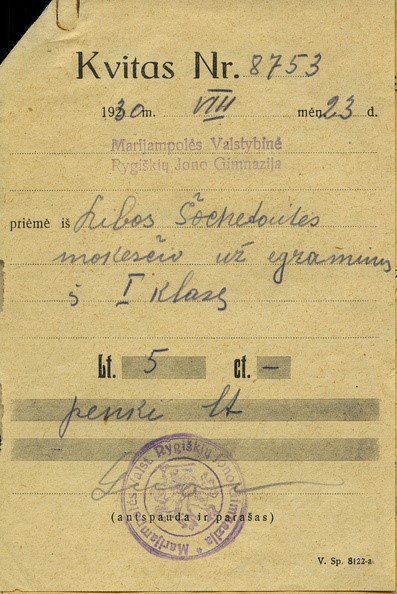
Jewish children also attended Lithuanian gymnasiums during the interwar period. On 22 March, 1922 the board of the Jewish community applied to the Minister of Education K. Jokantas with the pledge to cancel writing tasks during Saturday lessons. The tradition of Judaism does not allow to work on the day of Shabbat and writing is also not allowed. The minister considered the pledge of the Jews of Marijampolė and suggested the authorities of the gymnasium ‘‘not to make the students of Jewish confession write on Saturday provided that it did not hinder the work of the gymnasium“. As a result, a lot of interwar Lithuanian schools did not have examinations or tests on Saturday. There also are some stories how Jewish mothers gave sweets to Lithuanian children so that they would carry their children‘s bags with textbooks and notebooks, as on the day of Shabbat one cannot carry anything, too. At the end of Shabbat on Saturday nightfall the world had to be the same as at its beginning on Friday sunset.
Shabbat (Hebr. standstill) is the seventh day of the week in Judaic calendar, devoted for the worship of God. It starts on Friday evening at the nightfall and ends on Saturday at the sunset. The activities on this day are strictly regulated, everyday routine activities are forbidden. The day is for relaxation, communication and studying Torah. The idea of this day is that God rested on the seventh day after the Creation of the World and thus, His creation, a man, should not make any changes to his surroundings in any way.