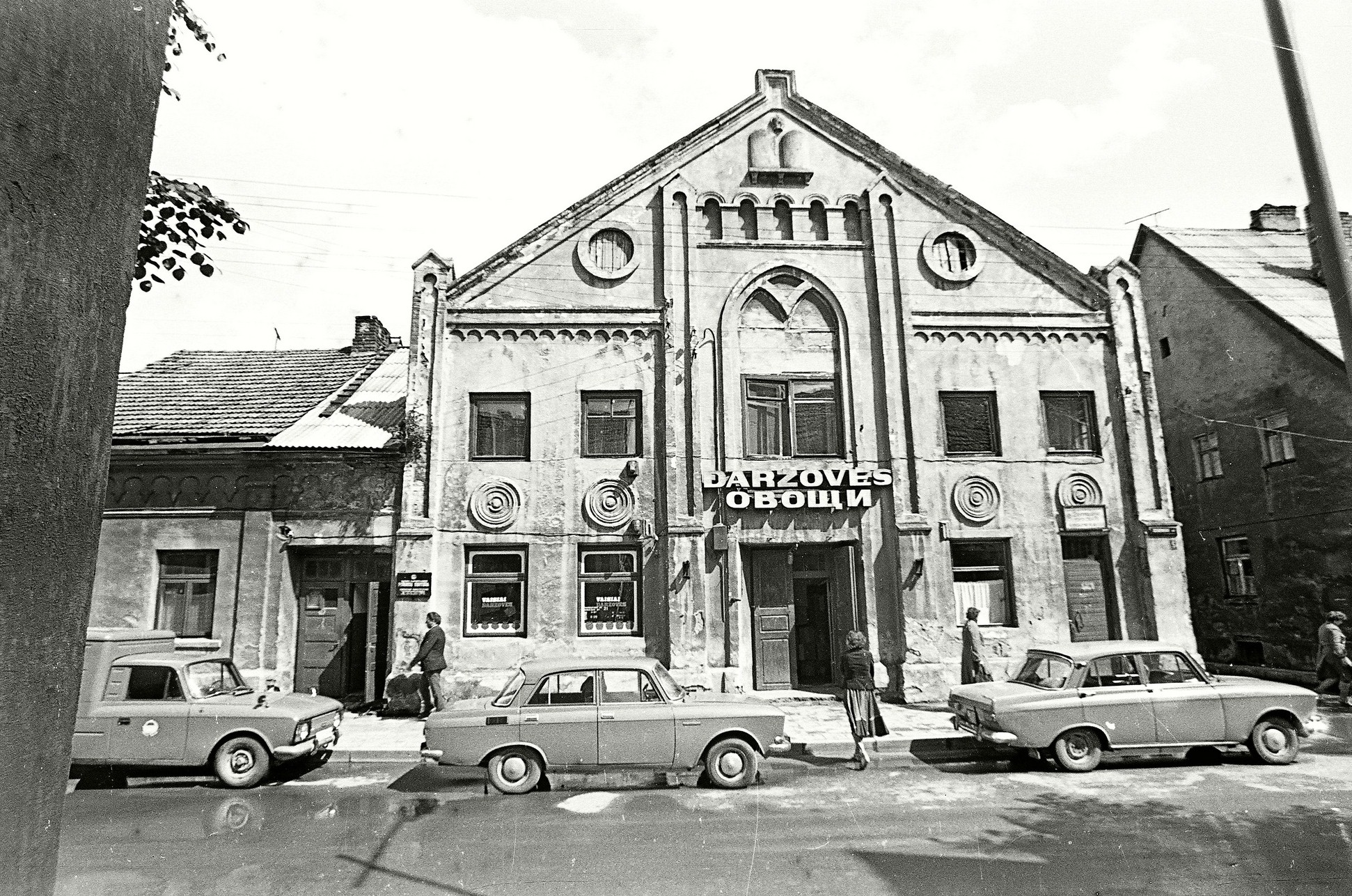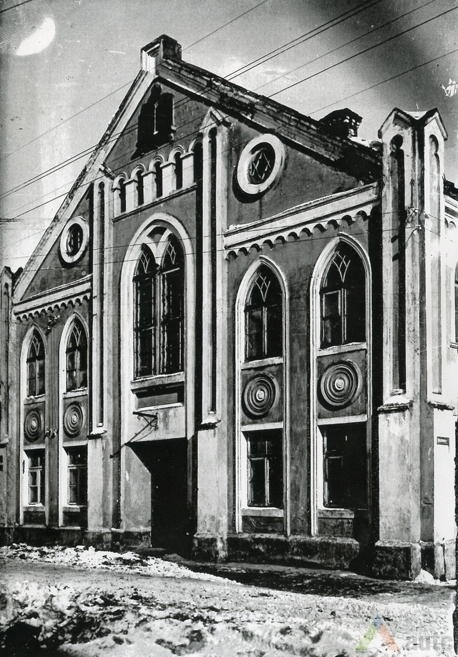
There were three synagogues in Marijampolė in the 19th century. The one that still stands today is the brick synagogue in a historical central part of the town in P. Butlerienė street, which stands out for its height, volume and peculiarity. It was built in the plot which was given as a present to the Jewish community by Z. Endelman. Not far away from the synagogue there is the river Šešupė. The river‘s place is not accidental – a lot of synagogues were built close to the rivers or small streams as flowing water is essential to mikvah (a ritual bath ). Thus, while looking for existing synagogues in any city one should pay attention to the water source. The project for a brick, square synagogue with a double-sided roof was designed by an architect V. Rybarsky in 1899, who made projects of several house of prayers of different confessions. Hakhnasat Orhim contains prevailing elements of the works of this architect: the features of neoromantism and neogothics stylistics and the motifs of eastern decor.
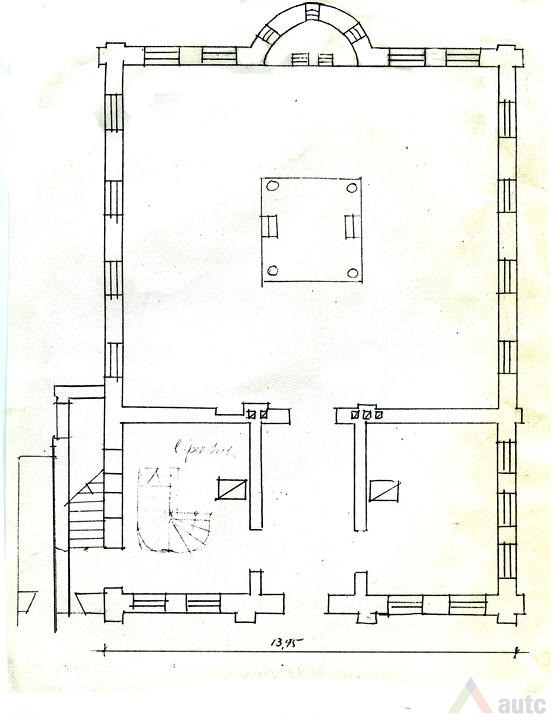
To design the synagogue the architects had to be aware of the requirements of Judaism to sacred buildings, besides, there were some restrictions from the Christians. They demanded that synagogues should not be seen in the surroundings of the city or town, they had to be lower than Christian houses of prayer and could not have any resemblance to them. However, the Jews, as well as the people of other confessions, wanted luxurious, tall and distinctive synagogues which could be seen from afar. Thus, the architects always had to manouver between what they wanted and what they could build. While building synagogues they kept to the main requirements of Judaism: the main and most important wall of the synagogue with Aron kodesh had to face the east or south-east, the direction of Jeruslem.
The congregation prays facing Aron kodesh. It was built in the eastern wall, in the apse of the synagogue and Torah Scroll was kept in the most sacred place. Synagogues had separate parts for men and women. Men prayed in the main part while women – in a separate part or the galleries above the main prayer hall. In the centre of the men‘s hall there was bimah, the platform with a reading desk to read from Torah Scroll.
The synagogue in Marijampolė was distinctive as it had heating system. The community gathered here in the cold seasons not only to pray but also to study Torah. They used the funds to buy candles and religious books so that those, who could not buy the books, could read them here. The synagogue served not only for religious purposes but also was a place for community gatherings. People could come here and talk, find out the news, get advice or just spend nice time. Usually craftsmen visited synagogue but there was a place at the porch of the synagogue for the beggars to stay overnight. Wealthier Jewish communities, as Marijampolė, that could build several separate synagogues, had at least one heated synagogue. However, they were smaller as it was more expensive to maintain them.
During the time of the Holocaust the Jewish community in Marijampolė were killed and the Soviets made it a warehouse in 1945. Also, surprisingly, there was a vegetable store once.